The Future of Surgery in the Age of AI and Digital Models: Experts Gathered for an Interdisciplinary Round-Table Discussion
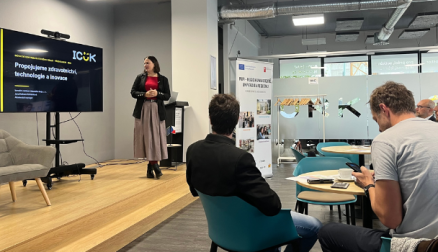
How can artificial intelligence, advanced computer modelling and innovative computational approaches transform modern surgery? How can they help doctors plan operations, minimise risks or predict patients’ post-operative condition? These are precisely the questions addressed by the interdisciplinary round-table discussion ‘Surgery: Data, Models and Clinical Practice’, organised today, 5 November 2026, by the Department of Informatics at the Faculty of Science, Jan Evangelista Purkyně University in Ústí nad Labem, at the Ústí Region Innovation Centre.
This gathering of leading experts focuses on linking the latest technological innovations with clinical practice, with a particular emphasis on the field of spondylosurgery, i.e. spinal surgery. The main aim is to initiate an interdisciplinary discussion on the potential applications of digital technologies and artificial intelligence in planning and prediction within surgical disciplines.
“The topic of the round-table discussion attracted not only staff and students from UJEP, but representatives from organisations such as Krajská zdravotní, a. s., and the Dr Pírka Clinic also presented their contributions. It is precisely these discussions with representatives from clinical practice that provide valuable feedback, enabling the applied outcomes of the projects to be taken further. I also greatly appreciate the contributions from researchers at the University of Wrocław. “Their participation is important not only for discussing the topics themselves, but also for developing the subject at an international level,” says Assoc. Prof. RNDr. Zbyšek Posel, Ph.D., Head of the Department of Data Analysis and Simulation at the Department of Computer Science, Faculty of Science, UJEP, and one of the organisers of the meeting.
The participants’ attention is focused primarily on how precise computational models of the human body and artificial intelligence algorithms can support surgeons’ decision-making, streamline the preparation of surgical procedures, help minimise associated risks and enable more accurate predictions of a patient’s future health status following surgery.
Technology is changing not only surgery, but also human perception
The panel discussion also addresses broader issues linked to the advent of modern technologies in medicine. Experts are examining how advanced digital models and visualisation tools influence human perception and surgeons’ spatial orientation, and what new demands this development places on the education and training of future generations of doctors.
The round table provided a forum for interdisciplinary dialogue between software developers, engineers, scientists and the surgeons themselves. It is precisely this close collaboration between the fields of technology and medicine that is one of the key prerequisites for the successful introduction of innovative solutions into everyday clinical practice and the further development of modern medicine in Czech hospitals.