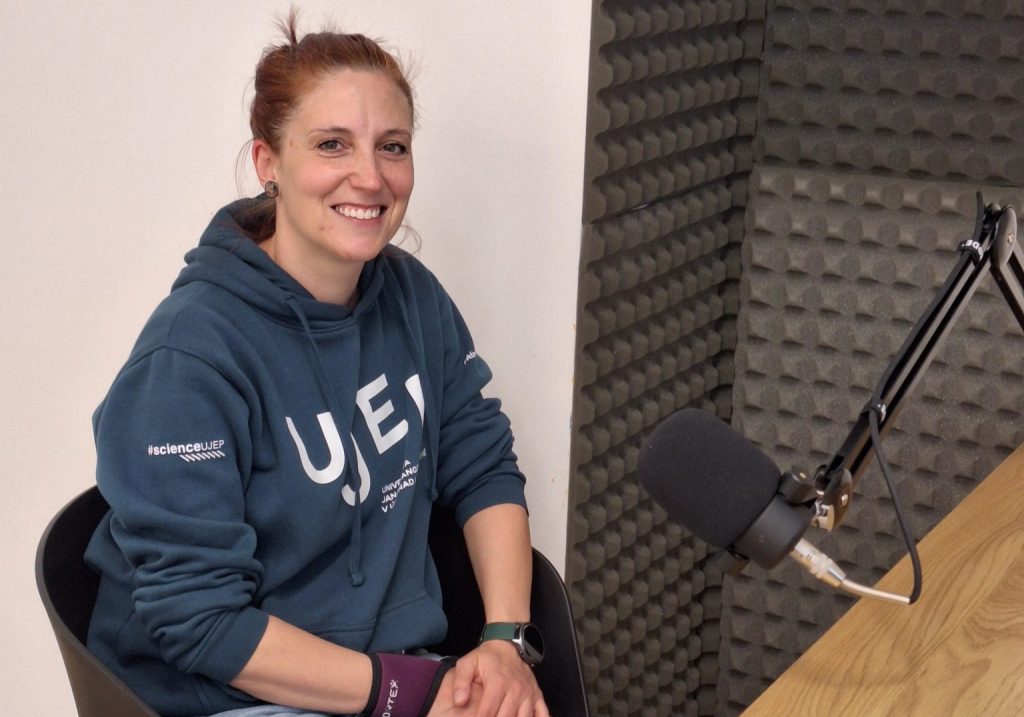
The Next Episode of Science Talks: Denisa Vošahlík Černocká on Pollinators, Dumps, and Her Path to Biology
In the latest episode of the Science Talks podcast, we spoke with Denisa Vošahlík Černocká, a master’s student in Applied Biology and Ecology at the Faculty of Science at UJEP. Denisa recently placed third at the UJEP Faculty of Science Student Research Conference, and her research focuses primarily on insects, pollinators, and landscapes recovering from brown coal mining.
In this interview, we look back at her somewhat unconventional path to biology—from nursing school and physical therapy, through floristry, to her studies in natural sciences at the University of Jan Evangelista Purkyně in Ústí nad Labem. We also discuss her bachelor’s thesis on entomophagy—the consumption of insects as food—and how she moved from “insects on a plate” to pollinators in the landscape.
The main topic of the episode is her master’s thesis, which focuses on brown coal mining spoil heaps in the Most region. Denisa explains why these areas are of interest to biologists, the difference between technical reclamation and natural succession, and what field research entails when studying the relationships between plants and pollinators. You’ll also learn why solitary bees are important, how much research depends on the weather, and why you sometimes can’t identify species without the help of other experts.
Toward the end, the conversation turns to future plans, work at the Teplice Botanical Garden, insect houses, stereotypes about ecologists and biologists, and whether it’s even possible to simply relax in nature when you’re also studying it. Listen to the new episode about insects, post-mining landscapes, and the enthusiasm that can lead to studying even after a long life journey.
You can find our podcast on Spotify and SoundCloud under the Podcasty UJEP banner, and later also on the faculty’s YouTube channel, where you can watch it with video.
#scienceUJEP